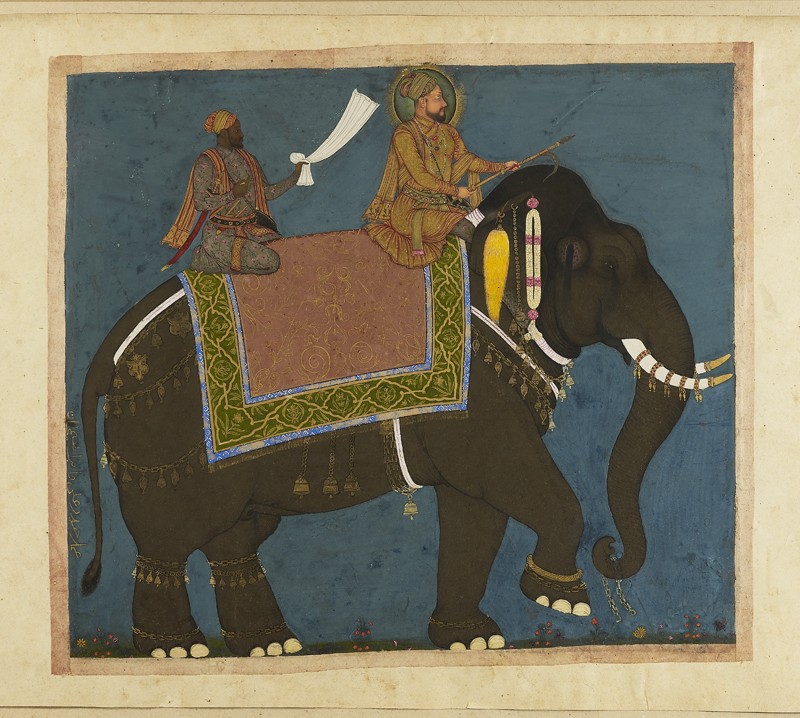
Sultan Muhammad 'Adil Shah of Bijapur and Ikhlas Khan riding on an Elephant Bijapur, by Haidar 'Ali and Ibrahim Khan, c.1645 Portraiture in the Deccan sultanates The Deccan (from Sanskrit dakshina meaning ‘south’) is the large central plateau that covers much of peninsular India. The five Islamic kingdoms or sultanates of Ahmadnagar, Berar, Bidar, Bijapurand Golconda ruled over a large section of South-Central India, but they were gradually conquered by successive Mughal emperors from Akbar to Aurangzeb between 1596 and 1686. Ahmednagar, Bijapur and Golconda in particular were centres of art and learning, and because of their adherence to the Shi’a branch of Islam (unlike the Sunni Mughals) their artistic influences came from Iran and the Middle East as well as from their powerful Mughal neighbours and earlier South Indian traditions. Sophisticated styles of painting developed at these three courts, where artists were already familiar with portraiture before the Mughal conquests. The ‘Adil Shahi dynasty of Bijapur commissioned some of the finest of all Indian paintings between about 1590 and 1680, and portraits of three generations of the ruling family are shown here, together with a fine, Mughal-style portrait of one of the many African officials working in the adjacent sultanate of Golconda.
Mughal-Library