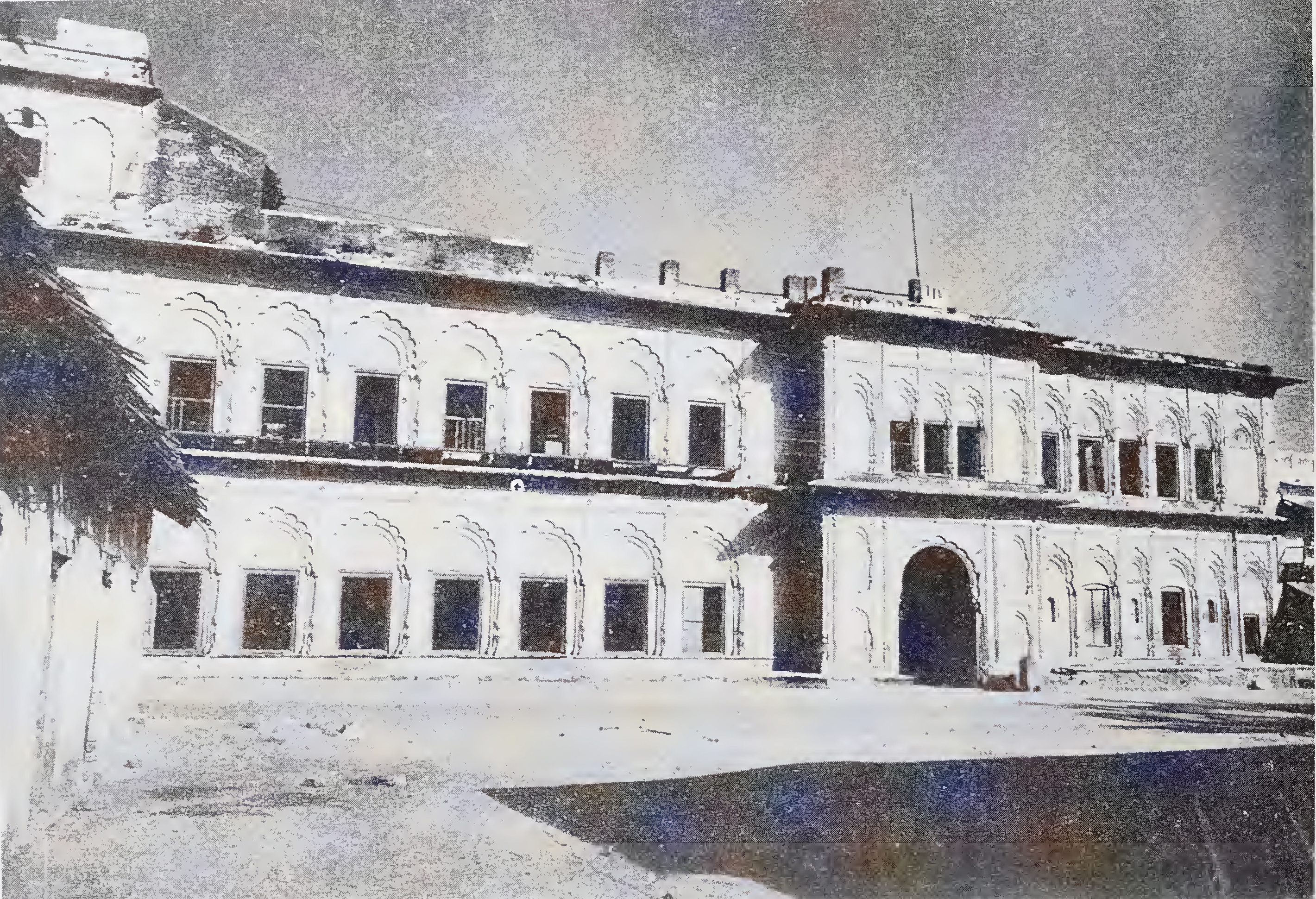
Rani Lakshmi Bai moved into this house after the death of her husband, Raja Gangadhar Rao, and lived here quietly until the standard of rebellion was raised at Jhansi. The old building now houses the Kotwali.
Rani Mahal of Jhansi was actually the palace of Lakshmi Bai, Rani of Jhansi. The palace of Lakshmi Bai has now been converted in to a museum that treasures the memory of Rani Lakshmi Bai as well as the archeological remains of 9th to 12th century that has been excavated and unearthed recently.
Rani Mahal is the former residence of the Rani of Jhansi that was built in the late 18th century. The palace consists of arched chambers around an open courtyard that looks magnificent and is a welcome break from the typical architectures of Bundelkhand. The palace has been the epicenter of the Great Sepoy Mutiny of 1857 in Bundelkhand region. Various plans for mutiny were hatched in this palace when the British Resident turned down the repeated efforts for reconciliation from Rani's side. When the 5th unit of the 12 Native Regiment revolted in the nearby fort, people close to Rani rose in revolt too and massacred every possible European sol of the city.
Mughal Library